
Insights
The impact of AI on marketing and how brands should be thinking about it
Back to articles / The impact of AI on marketing and how brands should be thinking about it
AI is changing how people discover travel brands: More travellers are now using tools like ChatGPT and Google’s AI Overviews to plan trips.
These tools don’t just show links (like traditional Google search, where users decide what to click); they recommend, summarise and filter options based on what they “understand” to be credible and relevant.
In practice, that means ChatGPT or Google’s AI Overviews decide whether your luxury hotel or destination is included at all in their answers.
For example, if someone asks for the “best family-friendly hotels in Europe,” it’s the AI -not the user - deciding whether your brand makes the cut.

That means discovery no longer starts (or ends) with search rankings.
Instead, AI pulls from a wide mix of sources: predominantly media coverage in respected or relevant niche publications, reviews, discussion forums such as Reddit, and consistent brand mentions across the web. Importantly, it does not (yet) pull from advertising -whether digital or social.
So, visibility now works differently.
It’s no longer enough to have a strong website or well-optimised SEO. AI looks for trust signals, and those tend to come from a broader ecosystem, including:
Media coverage (especially in authoritative or niche titles)
Reviews and user-generated content
Consistent brand mentions across multiple platforms
In simple terms: if others aren’t talking about your brand, AI won’t either.
This is why PR has become critical. It’s no longer optional and not a “nice to have alongside digital marketing.”
Large language models rely heavily on signals of credibility, and those signals are built through a combination of earned and owned content. Earned content - PR, press coverage, award wins, thought leadership articles, third-party validation -is doing a significant amount of the heavy lifting here.
Gartner (a leading global research and advisory firm) predicts that PR budgets will double by 2027 as brands respond to this shift. That reflects a growing recognition that reputation now drives visibility.
However, there’s an important caveat.
PR and content will only work if your brand is clear about who you are and why people should book with you in the first place.
And this is where we see many travel brands - particularly in the luxury space-struggle. There is often a strong desire to stand out, but when asked what makes the brand different, the answers tend to sound very similar: “personalised service,” “unique/authentic/experiential experiences,” “exceptional quality.”

These are important, but they are not differentiating. They are expected as the baseline by a luxury traveller, or any traveller in fact.
If your positioning is unclear, your messaging becomes generic. And if your messaging is generic, AI has very little to anchor onto.
If you are confused as a brand, AI will be even more confused.
That’s why the starting point isn’t simply more PR or more content -it’s clarity.
Travel brands need to be crystal clear on:
What they stand for (and what they don’t stand for!)
Who they are for
Why someone should choose them over competitors (and perhaps also why someone should not choose them)
Only then can they build the right trust signals around that position.
It’s also why we’ve developed our Clarity Package. We see many brands investing heavily in PR and content with us without first defining a distinctive, ownable position. Without that clarity, even well-executed campaigns struggle to gain meaningful coverage.
In the past, this didn’t always matter as much. Brands could get away with being a bit unclear, as long as they were well optimised for SEO and knew how to play the system.
That’s no longer the case. In an AI-driven landscape, a lack of clarity becomes a real disadvantage. If you’re not clear on who you are and what you stand for, it’s much harder for AI to “understand” and recommend you.
Clarity, therefore, is no longer just a brand exercise, it has a direct commercial impact.
The bottom line is this:
AI isn’t changing the fundamentals of marketing. It’s putting PR, a discipline that’s taken a back seat over the past 15 years, back at the centre of all marketing activity -and making any lack of clarity in positioning much more visible.
On the upside, brands that are clear about who they are, have real credibility, and are being talked about in the right places will naturally show up.
Those that aren’t will find it much harder to be seen.
For luxury travel brands, the opportunity is significant, but so is the urgency to get this right. Because defining who you are and what you stand for is still human work - and, thankfully, not something AI can do for you.
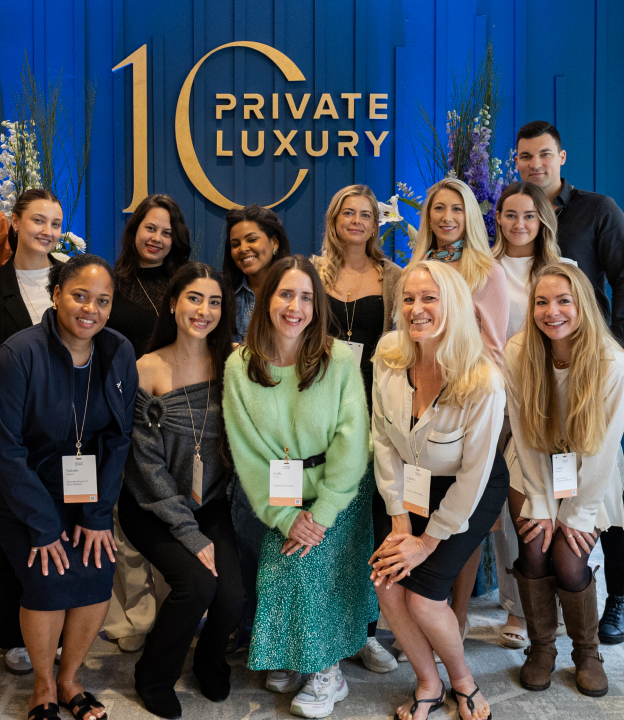
About Private Luxury
Private Luxury connects the world’s most prestigious brands, innovators, and decision-makers in luxury travel. With a reputation for delivering carefully curated events, we create an environment where business relationships flourish, collaborations take shape, and industry-defining insights are shared.
Tell me more